

Pick the kind of fight you want to have
Street Fighter 6 is the starting pick if you want a solo adventure, couch matches, and online competition in one PS5 game. To see how it differs from the alternatives, picture an opponent just outside your reach. In Street Fighter, a step forward can bring a button into range. In Tekken 8, a sidestep can make a straight attack miss. In Dragon Ball: Sparking! Zero, that gap can turn into a chase across the arena. The deciding question is which of those exchanges you want to play again. (game.capcom.com)
If teammates are the draw, ask who controls them. Mortal Kombat 1 gives your main fighter a separately selected Kameo assist. In MARVEL Tōkon, each player controls their own four-character lineup and can switch between available fighters. In 2XKO, you can control both champions yourself or have a friend take one on your side. (mortalkombatgamessupport.wbgames.com)
PS5 game / Pick it for / First solo stop / Check before committing
- Street Fighter 6; Side-on spacing and Drive Gauge decisions; World Tour or Fighting Ground; The PS5 demo leaves out Battle Hub. (game.capcom.com)
- Tekken 8; Close 3D duels and replays that let you retry an exchange; Arcade Quest; The PS5 demo has limited Versus but no Online Mode. (tk8.tekken-official.jp)
- Granblue Fantasy Versus: Rising; Simple skill inputs and visible frame feedback; Character Breakdowns and Punish Training; The Free Edition ended November 1, 2026. The paid PS5 game requires Plus for online play. (rising.granbluefantasy.jp)
- Guilty Gear -Strive-; Varying your offense and deciding when to spend meter; Mission or Arcade; Story is cinematic; Arcade is where you play the fights. (guiltygear.com)
- Mortal Kombat 1; A playable cinematic story and a main fighter with a Kameo assist; Base campaign; The violence is graphic, and solo Invasions requires internet. (mortalkombatgamessupport.wbgames.com)
- MARVEL Tōkon: Fighting Souls; Calling assists and switching between Marvel fighters; Episode Mode or All-Star Arena; Friends can face off, but they do not share one lineup. (blog.playstation.com)
- 2XKO; Sharing a tag team with a friend; The Climb; Ranked is disabled; the Casual Lobby leaderboard is not a separate Ranked queue. (playstation.com)
- Dragon Ball: Sparking! Zero; Aerial pursuits, transformations, and split-screen spectacle; Episode Battle or Custom Battle; Check whether both players can follow the action on half a screen. (playstation.com)
Rule out games that can’t deliver the session you want before comparing rosters. A bigger lineup doesn’t help if your friend wants to play alongside you and the game only lets you face each other. If two games still sound equally appealing, pick the one that gives you something to look forward to when your usual opponent isn’t available.
Street Fighter 6: the best all-round starting point
Street Fighter 6 is the default if you don’t yet know which kind of session will keep you coming back. World Tour is a playable adventure built around your avatar. Fighting Ground houses conventional versus play and practice. Battle Hub gives you an online arcade where you can watch a match or sit at a cabinet instead of going straight into matchmaking. (game.capcom.com)
Start in World Tour if you want progress that has nothing to do with your versus record. You can explore and learn from the series’ fighters without treating every encounter as a drill. For something to carry into your first couch set, pay attention to the reach of one attack. Notice how close you have to get, then see whether you can recognize that distance against someone who isn’t standing still. (game.capcom.com)
Go to Fighting Ground with a specific question. If you keep getting caught walking forward, record the training dummy jumping from the distance that gives you trouble. Try an anti-air, an attack that intercepts a jumping opponent. Input History shows what the game registered; use the recording to test whether you need to respond earlier or later. If you want live rounds between attempts, Ranked or Casual matchmaking can stay active during Training, Arcade, or Combo Trials. (game.capcom.com)
Try Battle Hub if seeing who’s playing sounds more inviting than joining a queue. Watch a cabinet match before sitting down at one yourself. The PS5 demo isn’t a test of that experience: it covers the opening of World Tour and some Fighting Ground content, but leaves out Battle Hub. (game.capcom.com)
In a match, try standing just beyond the reach of a quick ground attack. If your opponent swings and misses, you have a reason to step in. If they start jumping over that space, look for your anti-air instead. When you get an opening, check the Drive Gauge before committing to a follow-up. Spending Drive to close out a round is a different decision from spending it just because you know a longer sequence. (blog.playstation.com)
On a DualSense, compare Classic’s six attack buttons with Modern’s streamlined special inputs using the same fighter. Try one response on both sides of the screen. Dynamic can help a guest get started in supported offline Fighting Ground modes, but it isn’t available online. If you want one layout for the couch and online matches, compare Classic and Modern. (playstation.com)
The buying test is whether those small decisions make you want a rematch. The modes give you several reasons to return, but they won’t turn a side-on duel into a sidestepping contest or a tag match. If that’s what you want, choose a different game rather than a different control scheme.
Tekken 8: the pick for close 3D duels
Tekken 8 is the pick if a sideways step makes a close duel more interesting to you. Two fighters can be the same distance apart in two exchanges, but a long attack that reaches straight ahead can miss when the defender steps off its line. In Practice, keep the attacker and the move fixed, then compare backing away with stepping sideways. If that makes you curious about which moves catch a sidestep, you’ve found a reason to choose Tekken. (bandainamcoent.com)
Start Arcade Quest with three tools: an attack that reaches, a quick reply to an opening after a block, and a short follow-up after a launcher. Don’t turn the quick reply into a habit of pressing whenever you block. Find one move you can punish and learn to recognize its ending. If three jobs are too many to remember under pressure, take just one into the next match. (tk8.tekken-official.jp)
Heat gives you a reason to watch for a change in pace. If an opponent starts pressing forward under Heat, don’t assume the spacing that worked a moment ago will still serve you. Activate your own Heat when you have a plan for the offensive opportunity. Special Style can streamline attacks and combos, but the choice to guard, move, or press is still yours. (blog.playstation.com)
Arcade Quest teaches fundamentals through a tour of virtual arcades. Super Ghost Battle gives you AI opponents based on player data. Use a ghost match to see whether you can notice a movement pattern while trying to attack. Then take the same assignment into a match against a person who can spot your response and change what they do. (tk8.tekken-official.jp)
Open My Replays & Tips when you know which exchange you want back. It offers contextual advice in supported online and offline replays and lets you retry a recorded situation for ten seconds. Don’t count on the replay as a permanent record: Bandai Namco’s May 2026 version 3.01.01 update made older replay data unplayable. (tk8.tekken-official.jp)
If you’re buying for the couch as much as for practice, get a second player into a local match before settling on a main. Play a few rounds where you both watch what changes when one player starts stepping instead of retreating. Tekken Ball can break up ordinary sets, but the strongest reason to buy is still the duel itself. (tk8.tekken-official.jp)
Granblue Fantasy Versus: Rising: simple inputs and clear feedback
Choose Granblue Fantasy Versus: Rising if you want a side-on fantasy duel and would rather spend your first session judging where to stand than memorizing special-move commands. Simple inputs make it easier to call a skill. You still have to decide whether it will reach, whether the opponent expects it, and what you’ll do if they block. (rising.granbluefantasy.jp)
Start with a Character Breakdown rather than a combo list. Pick an attack suited to the distance your fighter likes. In practice, get close enough to land it, then back up until it misses. Step back into range without using a marker in the scenery and repeat from the other side. You’re learning to read the gap between the fighters, not memorizing where the dummy stood. (rising.granbluefantasy.jp)
Give the exercise a purpose in your next set. If the opponent keeps stepping into range and retreating before you swing, wait for them to come a little closer once. On another attempt, take the extra step yourself. If both attacks miss, ask whether you started out of range or the opponent was already leaving. The misses can look alike even when the fixes are different.
Then try Punish Training. A punish lands before the attacker can recover in time to defend. The color-coded frame display helps show who recovers first, but an advantage on paper won’t make a short attack reach across the gap a block creates. Compare a quick reply with one that reaches farther. Save Combo Practice for a different question: can you finish a sequence after the opening hit lands? (rising.granbluefantasy.jp)
Don’t plan on a free download to test it. Cygames ended the Free Edition on November 1, 2026, including access from already-downloaded copies. Existing Free Edition saves can still transfer to the full game. The paid PS5 version requires PlayStation Plus for online play, and Ranked Matches track a separate Versus Rank for each character. (cygames.prezly.com)
Granblue is the better fit if you want to go from a character’s preferred range straight to a drill with visible timing feedback. Street Fighter 6 is the stronger fit if you want an avatar adventure alongside the duels. If Granblue makes your shortlist, check whether the base game includes the fighter you want before paying for a bundle. (rising.granbluefantasy.jp)
Guilty Gear -Strive-: expressive offense and meter choices
Pick Guilty Gear -Strive- if the most interesting moment in a round is the one where your first plan stops working. Imagine you've backed your opponent into the corner, but they block the string of attacks you expected to open them up. You could end the sequence and keep the space you've gained. You could spend meter to keep attacking. Or you could leave a pause and see whether the defender tries to take a turn. The attraction here is not that one choice produces the longest combo. It's that the same opening can lead to different decisions depending on the resources both players have and what each expects the other to do.
For the attacker, the first question is whether keeping the pressure going is worth a Roman Cancel. Its effect depends on what is happening when you use it, so it isn't simply a button that adds more hits. In this corner exchange, think of it as a way to change the timing of a sequence that would otherwise end. If you have a follow-up in mind and the defender is still waiting for a familiar gap, spending meter can be worthwhile. If you're already in a position you like and have no clear idea what you'll do next, keeping the meter is a reasonable choice. Try both on purpose rather than spending it whenever you remember it's there.
For the defender, the separate question is whether to spend Burst to escape. If the attacker has opened you up and the incoming damage or continued corner pressure looks costly, using Burst can cut the sequence short and give you room. Holding it means accepting what's happening now in exchange for keeping an escape option for later. Neither choice can be judged just from the fact that you were cornered. Look at what you were actually escaping and what you think would have happened if you'd waited. Saving Burst is not much of a victory if you never get another useful chance to spend it.
The wall break asks a third question about position. If your offense breaks the wall, the fight transitions to another part of the stage and you gain Positive Bonus. That's a reward, but the geometry that helped you pin the defender in place also changes. Instead of assuming that the next exchange will happen with the opponent already stuck in the corner, be ready to approach or contest space again. Compare two corner sequences that start with the same hit: one that leaves you attacking with the wall still behind the defender, and one that takes the wall break. Which resulting situation are you more comfortable playing? That's a better guide to what you should practice than the length of either combo.
Mission Mode is the place to start if you like your lessons in small pieces. Take one lesson back into practice and give yourself a narrow goal, such as noticing when a blocked sequence would normally end and deciding whether to spend meter there. If you'd rather learn while playing CPU matches, choose Arcade. Its routes can branch based on match performance, and the matches give you a chance to make resource decisions without stopping to reset a drill. Story is a separate cinematic mode, not a playable campaign that alternates scenes with fights. If you mainly want a story you participate in through matches, don't buy on the strength of that mode name alone.
On PS5, Strive supports rollback and cross-platform play, which are useful if you expect to take those experiments into matches with other people. But the buying decision is still about the exchanges you enjoy. A good test during a set is to pick one corner sequence and see whether you can explain why you spent meter, saved Burst or took the wall break. You don't have to like the outcome to enjoy making the decision. If you'd rather keep your attention on distance and a smaller set of immediate choices, there's no reason to treat Strive as the game you ought to move on to. Choose it because you want to vary your offense and improvise when the defender catches on.
Mortal Kombat 1: cinematic fights with a partner you don’t have to main
Choose Mortal Kombat 1 if you want a cinematic story you fight through or if you like the idea of an assist without learning a second playable fighter. The graphic Fatalities belong near the top of the buying decision, especially on a shared television. If that isn’t a deal-breaker, decide whether you’d open the campaign, Invasions, or Versus first. (mortalkombatgamessupport.wbgames.com)
The base campaign moves through a set sequence of scenes and fights. Khaos Reigns continues the story; it isn’t the campaign you already get with the base game. The PS5 Definitive Edition includes both, along with Kombat Pack content and cosmetic extras. If the story is the reason you’re buying, check which campaigns are included before you compare fighter lists or costumes. (mortalkombatgamessupport.wbgames.com)
Invasions is a different kind of solo session. You move across a map, adjusting your build for the challenges in front of you. It suits a player who would rather stop after clearing an obstacle than finishing a chapter. Invasions requires an internet connection; the base campaign is the better choice if you want to play the story offline. (mortalkombatgamessupport.wbgames.com)
In Versus, choose a Kameo from a separate roster. You keep direct control of your main and call the Kameo for help rather than switching into that character. If you’re having trouble closing the gap, compare two assists from the same distance. See whether either one buys enough time to advance into a range your main can use. (mortalkombatgamessupport.wbgames.com)
If getting close isn’t the problem, give the Kameo another job. Try it after a blocked attack that normally ends your turn and see what it changes. Or start from an opening you often land and try a short follow-up with the assist. Judge the Kameo on whether it solves a recurring problem, not on the longest sequence you can rehearse.
Start with the base game if it already gives you the campaign and pairing you want. If the expansion is the draw, look for Khaos Reigns by name. If the pairing is the draw, check the main and Kameo rosters separately; owning one fighter doesn’t tell you whether the other is included. (mortalkombatgamessupport.wbgames.com)
MARVEL Tōkon: Fighting Souls: build a lineup you want to switch into
MARVEL Tōkon: Fighting Souls is the PS5 pick if you want to make a different kind of decision after choosing a fighter: not just how to get your current character into position, but whether another member of your four-character lineup should handle the next exchange. Each player controls their own lineup. That matters more than the number of names on the select screen. A character you enjoy seeing arrive for an assist and a character you want to control after a switch can earn a place for different reasons. If you’ve only played games where your one fighter stays in for the whole round, try judging a lineup by what you would want each member to do before worrying about whether you can play them all equally well. (playstation.com)
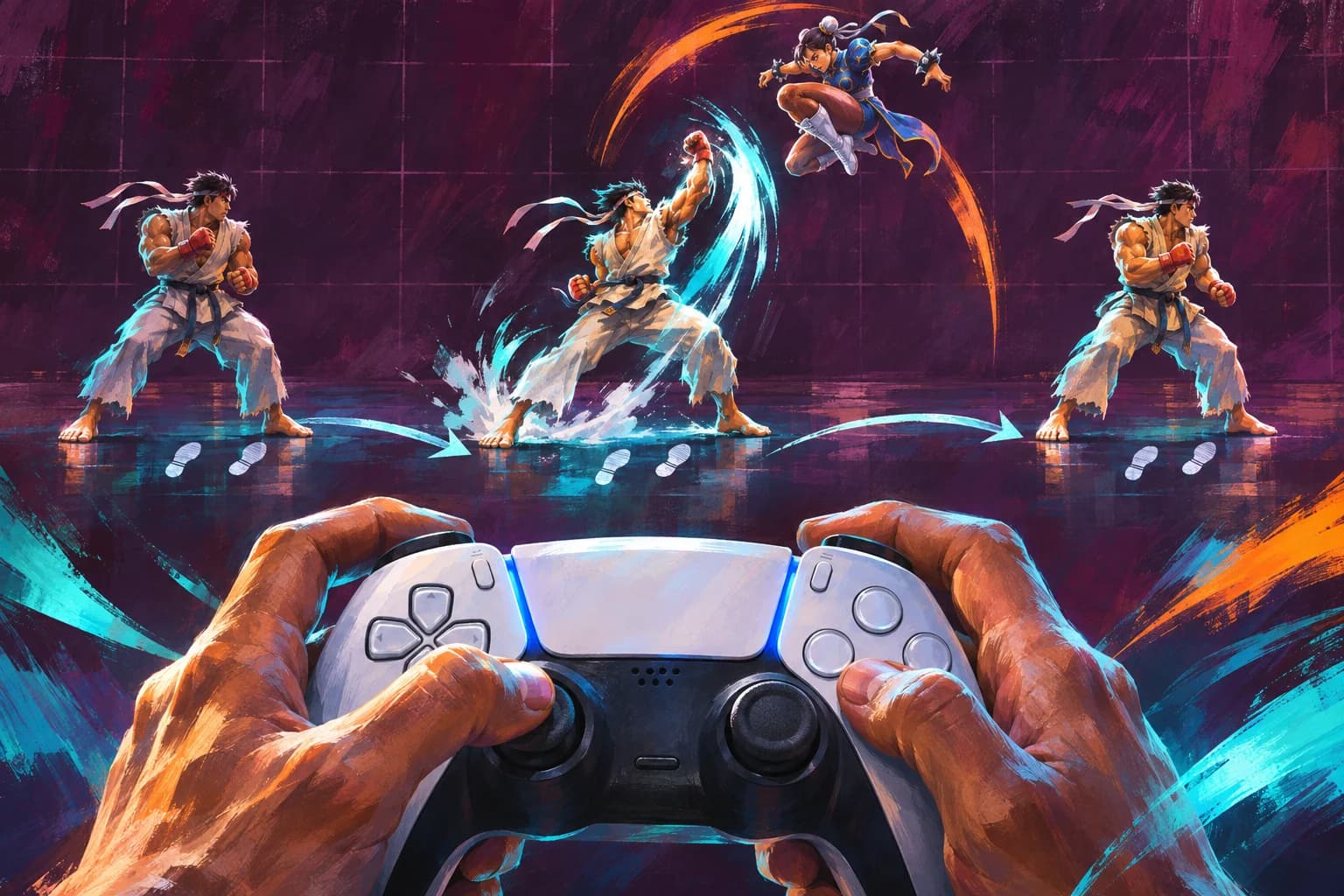
Start with an exchange you can imagine happening more than once. Suppose your opening fighter gets close, makes the opponent block, and then loses contact when they back away. An assist and a switch suggest two different plans. With an assist, you’re asking for help while keeping your current fighter in charge of the approach. With a switch, you’re asking whether it’s worth playing the next exchange as someone else. The official beginner’s guide distinguishes the two; make the distinction concrete by describing what you intend to do afterward. ‘I want a chance to follow them’ is a reason to call for help. ‘I want to stay farther away and make them come to me’ is a reason to consider changing fighters. Neither is a rule about which input automatically wins that situation. (blog.playstation.com)
One useful lineup experiment is to compare continuity with a change of pace. Imagine you like advancing with your starter and want the team to make that plan easier to repeat. Build one version around teammates whose contributions you can imagine using without abandoning the approach. In a second version, replace one teammate with a fighter you’d be happy to control from farther away. Keep the starter and opposing lineup fixed for a few games if you can. The comparison is not whether the second lineup gives you more things to do; it almost certainly gives you a different thing to consider. What matters is whether you recognize a moment when you’d rather change the terms of the exchange than try to restore your starter’s preferred situation.
Test the switch from an awkward position as well as from a comfortable one. It’s easy to enjoy the idea of a ranged teammate while standing at a distance that already suits them. The question is whether you still want to play that character when the opponent is close and you have to create the space yourself. In Training, have a friend start from the same position twice. In one attempt, stay with the fighter you know; in the other, try taking over with the teammate and play long enough to see what your first decision becomes. You needn’t prove the switch was optimal. You’re checking whether the teammate offers a choice you can understand under pressure, rather than a plan that’s appealing only when you imagine the exchange starting on favorable terms. The game supports a second local player in Training. (playstation.com)
A lineup can also put too many jobs on the one character you already trust. Suppose you pick three teammates for their assists, but every time you control one directly you look for the first chance to get back to your starter. That doesn’t show the lineup is bad. It tells you what part of this kind of fighter you’re currently enjoying. Try replacing just one teammate with someone whose basic decisions make sense to you without a rehearsed sequence. Give that fighter a small assignment: manage one distance, answer one approach, or capitalize on one obvious opening. The test is whether a switch gives you a second plan you want to use, rather than leaving you with four portraits and only one character you’re looking forward to playing.
There’s a useful buying distinction here between playing against a friend who also likes teams and looking for a game you can learn alongside that friend on the same team. In Tōkon, a friend can oppose your lineup in local Versus, or help you test it as the second player in local Training. They aren’t taking over a member of your lineup so you can specialize in just one fighter. In 2XKO’s duo setup, that division of responsibility is the point: each person can take a champion. Mortal Kombat 1 separates the jobs another way: you control your main and call on a separately selected Kameo, without switching into that assist fighter. Ask where you want the responsibility for the next exchange to sit: with your current main, with you as another character, or with the person beside you. (playstation.com; playstation.com; mortalkombatgamessupport.wbgames.com)
Use the offline modes to separate lineup curiosity from the pressure of playing another person. PlayStation lists Episode Mode, All-Star Arena, Training, and local Versus as playable offline. If you’re drawn primarily by Marvel characters, start with the solo offering that interests you rather than preparing a team as if you were about to enter a competitive queue. If the lineup system is the attraction, spend part of the sample in Training and then take the same lineup into a match. Training tells you whether you can make the intended change; the match tells you whether you notice an occasion to make it while your attention is divided. That difference is worth testing before you conclude that a character combination works for you because it made sense while both fighters stood still. (playstation.com)
The best sign for this particular purchase is a moment when you can name two next moves that sound fun for different reasons. Maybe you want to keep your starter in and see whether an assist gives them room to advance. Maybe you’d rather switch and see if the opponent can adapt to a different range. If you keep choosing the first because you want one character to remain the center of every exchange, that points toward an assist-focused design. If you want the second choice to belong to a friend, that points toward a shared team. Tōkon makes its strongest case when you want both choices to be yours and have a concrete reason to alternate between them.
2XKO: the choice when you want to share a team
2XKO is the free-to-play PS5 pick if you and a friend want to fight on the same side. Each player controls one champion in a duo, or one person can handle both. Riot’s September 8, 2026 update disabled Ranked, removed the Battle Pass, and made champion access automatic. October’s Casual Lobby leaderboard gives results a visible consequence without restoring a dedicated Ranked queue. (playstation.com)
Riot announced that active development would end in December 2026. It described the November 12 update as its last balance patch and recorded a separate November 24 hotfix in the same notes. Riot says matchmaking servers will remain online until further notice. That’s not a server shutdown announcement, but it doesn’t guarantee a short wait at the hour you usually play. (riotgames.com)
For your first duo set, agree on who starts and give the other player one cue for an assist. For example, call for help when the opponent backs away and you’re ready to follow. If the assist arrives while you’re already retreating, compare what each of you saw. Adjust that cue before you add more calls.
Give the switch its own cue if the Fuse you chose allows the tag you’re practicing. An assist can help the current fighter advance; a tag can hand the next exchange to your partner. Reverse the starting order without changing champions. One of you may like opening the round while the other prefers coming in after seeing how the opponent plays. (2xko.riotgames.com)
Local Duo takes two controllers on one PS5 into an online lobby together. The host enters a cabinet and the guest joins at Champion Select with their own PlayStation account. Neither needs PlayStation Plus. If you return to the lobby, the guest has to join again. Here, local means you’re sharing the console, not that the lobby works offline. (support.riotgames.com)
Try The Climb when your partner isn’t around. Its branching routes and upgrades let you experiment against CPU teams, and the mode also supports duo play. The October 27 update added Offline mode access for The Climb, but offline runs don’t advance its cosmetic-unlock quests. To use Offline mode on PS5, sign in online at least once on that console. On a later launch, disconnect the console before opening the game. (2xko.riotgames.com)
Dragon Ball: Sparking! Zero: choose the arena, not the arcade blueprint
In Dragon Ball: Sparking! Zero, an opponent can pull away and turn a close exchange into a flying pursuit. You can close the gap across an open arena, transform during the fight, and watch the surroundings break apart as the clash moves through them. That’s a different reason to buy a PS5 fighter than wanting to sidestep an attack in Tekken 8. Both games use three-dimensional space, but moving around the side of a nearby opponent isn’t the same experience as chasing one across an arena. I’d choose Sparking! Zero because that chase sounds like a good part of the fight, not because it seems like a substitute for a 3D duel.
If your first thought is of a fight you already know from Dragon Ball, start with Episode Battle. Pick one familiar confrontation from the episodes available to you and give it a session rather than racing to the next one. On the first attempt, get used to how quickly the characters can separate and how much of the fight is spent getting back into range. On the next, see what happens if you wait for a better opening to pursue rather than immediately following every retreat. The appeal here is participating in a recognizable confrontation. You don’t need to turn an evening with Episode Battle into preparation for matches against other players.
If you’re more interested in a fight the series didn’t stage for you, go to Custom Battle. Start with a premise you can describe in a sentence: a challenger gets one more shot at a rival, or a confident favorite spends the opening of the fight on the back foot. Choose the matchup and setting to fit that premise, then play through your setup before elaborating on it. Notice which moments actually sell the idea. A long pursuit might make a comeback feel earned in one scenario and drain the tension from another. Revise the setup around the part you’d want a friend to experience, rather than piling on ideas before you know what makes the first version fun.
For two people on a couch, make the stage part of the evening instead of leaving it as a default. Pick a place you both want to see in action, play a short split-screen set, then pick a contrasting stage and run the same matchup back. Keeping the fighters the same makes it easier to notice how the setting changes the feel of the chase and which moments each player can follow on their half of the screen. If one person is new, use the first match to get comfortable with losing and reacquiring distance rather than stopping every time someone misses an attack. Save the instant rematch for when both people want one.
The local-stage caveat in older descriptions needs a date attached to it. Bandai Namco’s December 12, 2024 update expanded offline split-screen multiplayer to all playable stages. The original restriction is therefore not a reason to rule out the updated PS5 game for a couch session built around picking different arenas. That change addresses stage selection, not whether you personally enjoy following a fast-moving fight on half a screen. If split-screen is the main attraction, judge it from your usual seats: can both people keep track of an opponent pulling away and tell what happened when the fight came back into close range?
The three modes make sense for different evenings. Episode Battle gives the player who wants to revisit a familiar fight a starting point without having to design one. Custom Battle gives the player who keeps imagining alternate matchups something to build, test, and revise. Split-screen works best as the deciding factor when the other person is as interested in seeing how the clash unfolds as in winning it. Those are separate reasons to buy: loving the idea of a custom scenario doesn’t tell you whether your usual couch partner will enjoy the camera and pace.
The question I’d use to settle it is what you want to happen after the fighters separate. If your instinct is to launch after the opponent, see where the pursuit takes you, and look for the right moment to transform, that space is part of what you’re buying. If you’d rather both fighters stayed close enough for the next exchange to turn on a small adjustment in position, an arena can feel like an interruption. Neither answer depends on counting characters or settling a debate about balance; it depends on which part of an ordinary fight you look forward to repeating.
Find a main by asking how you want to win an exchange
When a round settles down and neither player has an opening, what do you want to happen next? You might want to stand just outside a rival’s reach and make them miss, get close enough that they have to block, or keep them far enough away that their approach becomes predictable. Those preferences are more useful when picking a main than a favorite highlight clip. A spectacular finisher tells you what a character can do after things go right. The better test is whether you enjoy what that character does while trying to make an opening in the first place.
Audition three fighters in the same game: an all-rounder, someone who wants to close the gap, and someone who likes to keep opponents out. Treat those labels as descriptions of where to start, not rules about where anyone belongs. An all-rounder may still do their best work at a specific distance, and a keep-out character still needs an answer when cornered. If you are trying Granblue Fantasy Versus: Rising, use the character breakdowns to identify each candidate’s effective range. Then spend a few minutes at that distance before deciding whether the description matches what you like doing.
Give each candidate the same three jobs. First, find a move you trust at midrange: start far enough away that it misses, then move in until you can judge where it starts to reach. Second, find an answer to one common approach, such as a jump in a side-on game. You only need one response you can recognize and use. Third, choose a simple payoff for a clean opening. A reliable follow-up after a hit is enough; if you can’t tell whether the opener connected, rehearsing a longer sequence won’t help you spot it.
Take that small toolkit into a short set. Three games against the same friend make a useful comparison, especially if they play normally rather than feeding you the situations you practiced. Look for the moment your preferred range disappears. If you picked a close-range fighter, what do you do when your opponent keeps backing away? If you picked a keep-out fighter, can you get back to a comfortable distance once they’re in? The all-rounder has a test too: when you can either advance or hold your ground, do you enjoy making that choice, or would you rather have a more obvious goal?
After the set, separate three reactions that can feel like one. Did you like the character enough to want another round? Did you like the decisions the character kept asking you to make? Could you get the moves you wanted under pressure? It’s possible to love a fighter’s look, enjoy their approach to a matchup, and still dislike the inputs that make it work. It’s also possible to drop an easy follow-up twice and still want to play again because the decisions leading to it felt right. A win doesn’t settle any of those questions.
For a team or assist game, wait until the lead has a recurring problem before you audition a partner. Say you enjoy a close-range lead but hesitate when opponents stay outside your reach. In MARVEL Tōkon: Fighting Souls, the director uses Wolverine and Iron Man to illustrate how different ranges can complement each other. A ranged teammate gives you something to test in that awkward stretch before Wolverine gets close. Try the assist for that particular job, then try switching and ask whether you actually want to fight at Iron Man’s range yourself. Those are separate reasons to keep him on the team.
In Mortal Kombat 1, the audition is narrower: a Kameo comes from a separate assist roster, so you’re testing what that assist adds while keeping your main fighter, not choosing another fighter to switch into. Keep the lead and the situation fixed when comparing Kameos. If the job is helping you get in, judge whether an assist improves the approach you were already attempting, rather than letting a flashy combo decide. The same idea works for the main roster: start with the fighter whose ordinary decisions make you want another set. A main can be a choice for this week, not a commitment for the life of the game.
Simplified controls solve different problems in different games
Before choosing a simplified scheme, name the part you want simplified. Are you losing track of which button gives you the attack you meant to use? Can you recognize an opening but not finish the directional motion in time? Do you land the first hit and then lose the follow-up? Those are different problems. A layout can reorganize attacks, a shortcut can reduce the directions needed for a special, and a combo assist can help with a sequence. A context-sensitive action is different again: what comes out depends on the situation rather than you always calling for the same move.
Street Fighter 6 makes the layout distinction particularly clear. Classic gives you a six-button attack layout, while Modern streamlines special-move inputs within a different control scheme. Compare them using a character you’re considering, not just the first special you can get to come out. If Modern makes your response to a jump easier, that’s a practical gain. Now check the ordinary attack you want at midrange and the follow-up you use after a hit. The important question is whether you can still call on the actions that give you a reason to pick that fighter, and whether their assignments feel sensible under pressure.
Dynamic answers a different question: can someone pick up the pad and get useful, context-sensitive actions without learning how to select each move first? That can be handy when the immediate goal is to get a guest into a round. But Capcom limits Dynamic to certain offline Fighting Ground modes; it isn’t available online. If the plan is to go from couch practice to online sets, audition Classic or Modern in the mode you want to play. Comfort with Dynamic tells you something about a local session, but it doesn’t tell you how either of the other layouts will feel.
Elsewhere, read the feature description before assuming that a familiar label means a familiar layout. Tekken 8’s Special Style streamlines attacks and combos; try it if the sequence after an opening is the sticking point, but don’t expect it to tell you when to block or step. Granblue Fantasy Versus: Rising offers simple skill inputs, and MARVEL Tōkon: Fighting Souls offers quick and motion inputs. In either of those games, compare how you call for a particular skill. That is a more useful test than treating every simplified option as a decision between two entirely different ways to play.
On a DualSense, start with one character, one move and one distance. Pick a move with an obvious use, then perform it several times while facing right and again while facing left. A directional input that feels automatic from the starting side may not feel that way after you switch sides. If the game shows input history, compare what the pad registered with what you intended. Try the same test on the other scheme without changing characters or moving closer. That way, a more forgiving distance doesn’t get mistaken for a better input.
Next, ask a friend or a training dummy to apply a little pressure. Block first, then perform the same move when there’s room; see whether you can wait for the right moment instead of pressing as soon as you see movement. Finally, repeat an easy conversion: land a familiar opening hit and turn it into a short follow-up. Try that from both sides too. If a scheme helps you finish the sequence, vary the setup so the opening sometimes doesn’t arrive. The point is to know whether you can choose when to use the sequence, not just whether you can make it appear.
For the final comparison, look at the game’s move list and the rules of your intended mode. Check whether the attacks you rely on are directly available, reached through another input, or absent from the scheme you tried. Then decide which difference matters during an ordinary set. You may value a shortcut because you can finally act on something you’ve learned to recognize, or prefer the layout that makes a frequently used normal easier to find. Neither choice needs to be temporary. Use the scheme that lets you make your own decisions reliably in the matches you actually want to play.
Set up the DualSense before shopping for a fight stick
Start with the controller already connected to your PS5. Before deciding that you need a different kind of hardware, find out whether the problem is a direction, a button assignment, or the way your hand has to move between them. Pick a short sequence that comes up in your game: move forward, return to neutral, block, then perform a familiar attack. Repeat it on the DualSense D-pad and on the analog stick. Keep the character, control scheme and button assignments fixed while comparing them. Favor the option that gives you the intended result repeatedly without making you grip harder or reposition your hand.
If training mode offers an input display, turn it on before changing anything. You’re looking for the first thing that doesn’t match your intention. Maybe you think you let go of forward before pressing attack, but the display shows the two overlapping. Or perhaps the directions are right and you’re brushing another face button on the way to the one you want. Do a few repetitions at normal match speed as well as slowly. An input that works when you’re watching your thumb may be less dependable when you’re looking at the opponent.
Remap one awkward action at a time. If an action you use often makes you take your thumb away from something you need immediately afterward, try a shoulder button that you can comfortably reach. Then test both the action you moved and whatever used to occupy that button. A nicer assignment for one move isn’t an improvement if it makes a more frequent action awkward. In-game settings are a useful first stop when available, since you can work from a list of actions. With system-level remapping, an on-screen prompt can still show the game’s expected button, not the physical button you now press to send that input.
Once a layout feels workable, check it for a whole round rather than a single move. Can you reach and hold the buttons you need without shifting your grip? Does vibration make it harder to repeat a sequence comfortably? Try the available settings and see whether you can still recognize the cues you rely on with vibration reduced or off. Do the same for sound and visuals: if a noisy room masks the cue you use, look for a visual one you can read; if an effect is hard to pick out, see whether sound makes the moment clearer. PlayStation Store Accessibility Tags are a starting point for checking supported features, not a substitute for trying the combination you need.
A second controller can solve a different access problem. PlayStation’s controller assistance feature lets two controllers contribute to one player’s inputs. That can help if one person wants to handle movement while someone else helps with buttons they can’t comfortably reach. It does not add an opponent to local versus, or a teammate who controls a separate fighter. Decide which setup you’re trying to create before you start assigning controllers; the sign that it works is either two people contributing to one player or two separate players joining the game, not simply that both pads are connected.
If you borrow or buy an arcade stick or leverless controller, check the exact model against the exact game and the build you have installed. Running a PS4 game on a PS5 is not the same compatibility question as running the native PS5 version. A DualShock 4 can work with supported PS4 software on PS5, but that isn’t a basis for assuming it will work with a native PS5 fighter. Likewise, MARVEL Tōkon lists support for PS5-compatible arcade sticks and leverless controllers; the qualifier matters. If you intend to take the controller to an event, verify the organizer’s rules separately. Working on your console doesn’t establish that the model and configuration are allowed there.

Give borrowed hardware the same test as the DualSense before deciding. Connect it to the build you intend to play, confirm that the directions and important buttons register as expected, and repeat the sequence from both sides. Then play a full round to find out whether the new layout is comfortable when you’re reacting rather than rehearsing. A different controller can be worth it if it solves a repeatable input or access problem, or if you simply prefer using it. If one remap on the pad you already own fixes the problem, there’s no need to turn a button-placement issue into a hardware purchase.
Buy the kind of solo mode you’ll actually play
Picture the evening when nobody else is available. Do you want to pick up where you left off, get through the next chapter, play a few rounds against the CPU, or make a challenge worth coming back to? Those are four different reasons to buy a fighting game, even if the store puts them all under single-player. To narrow the list, imagine a long evening when you want some continuity and a short evening when you might not even have an internet connection. The same game doesn’t have to win both tests. Buy for the evening you have more often.
For an ongoing adventure, Street Fighter 6’s World Tour is the best fit here if the fighter you want to spend time with is one you made. It’s a playable adventure led by your avatar, so an evening can be about exploring, building that character and taking fights along the way rather than clearing a predetermined sequence of bouts. A useful stopping point is the next bit of progress you wanted to make, not a certain number of wins. Some habits travel well: noticing when an opponent jumps and getting comfortable with a move that answers it are useful in versus, too. But improving your avatar is a good reason to keep playing even if you never plan to queue.
For a directed story, Mortal Kombat 1 is the better fit if you want a game to decide what happens next. Its cinematic campaign gives you scenes to watch and matches to play through. That’s different from the freedom to spend an evening wandering in World Tour, even though both ask you to fight. It’s also different from Guilty Gear -Strive-, where the cinematic Story mode and playable Arcade mode are separate. If your ideal evening is to watch part of the story, fight the next match and then stop at a natural break, Mortal Kombat 1 fits that rhythm. If you’re happy to watch a story one night and play a set of matches another, Strive’s split may suit you just as well.
For a short CPU session, judge the game by how readily you can get to the fights you want, not by the size of its campaign. Strive’s Arcade is a sensible choice if you like a run with some shape to it: the path can branch based on how your matches go. If an evening without internet is the deciding test, PlayStation explicitly lists All-Star Arena and Episode Mode among the modes you can use offline in MARVEL Tōkon: Fighting Souls, alongside Training and local Versus. You could take your usual lead into a short All-Star Arena session, try bringing in a teammate deliberately rather than on impulse, and quit when you’ve had enough. There’s no need to start a long story just to make a brief session feel worthwhile.
For challenges you can build or revisit, ask whether you want to make the scenario or solve one the game gives you. Dragon Ball: Sparking! Zero’s Custom Battles are a reason to choose it if imagining the matchup is part of the fun. Spend one evening setting up a clash you’d like to see, play it, then change something about the setup and see whether the new version tells a better story. Mortal Kombat 1’s Invasions gives you a different kind of project: follow a map, work on a build and take on the next challenge. That loop can justify the purchase on its own. It doesn’t have to double as practice for fighting a human opponent.
The part of solo play most likely to carry into versus is a decision you can repeat under slightly different conditions: noticing an approach before committing, for example, or checking whether your favorite attack actually reaches. A CPU set can give you room to try that without an audience, but success against the CPU doesn’t tell you how another player will adapt. And if you spent the evening designing a Dragon Ball scenario rather than rehearsing a response, that time wasn’t wasted. Before paying, name the mode you’d actually open and check its connection requirements specifically. Single-player tells you how many people are playing, not whether an internet connection is required.
Practice one decision, not a wall of combos
Pick one moment you’d like to handle differently next time you play. Maybe you keep pressing a ground attack just as the other player jumps at you. You don’t need a new combo to fix that. You need to see the jump soon enough to use one reliable anti-air, a move intended to catch an airborne approach. On your PS5, give yourself a short training session with a finish line: recognize the jump without already knowing it’s coming, then make the response often enough that you’re willing to try it in a match. Don’t add a follow-up until the first decision makes sense.
Street Fighter 6 lets you record the training dummy’s actions and play them back. Pick a distance that resembles the jump you’ve been losing to, then record the dummy waiting briefly before jumping toward you with an attack. Play the recording and try one anti-air with your usual character and controls. At first, use the same setup to work out whether the move covers the angle and when you need to press it. If the wrong move comes out, check Input History before changing your timing or your choice of attack. It can show whether you entered the command you intended. If the right move comes out but the jump still beats it, test whether pressing earlier helps before blaming the input.
Now record a second action from the same distance: have the dummy stay grounded or walk forward after a similar pause. Mix the two recordings so you aren’t simply pressing at a memorized beat. Your job is to anti-air the jump and leave that button alone when the dummy stays down. Count pressing at the wrong cue as a miss, even if the button itself comes out perfectly. Once you can tell those two situations apart, move a little closer or farther away. You may find that the hardest part wasn’t doing the move at all; it was knowing when that particular response would cover the opponent’s approach.
Use the same format if the trouble starts after you block. Record the dummy doing the attack you want to answer and then trying to guard. Startup is the time between beginning a move and its first chance to hit; recovery is the time after its active part before the character can act again. A punish hits before the attacker can recover in time to defend. After a block, your character also needs to finish reacting to the impact before you can act. The question is whether your response starts quickly enough in the time left over. Try a quick attack first. If the dummy blocks it, the response may be too slow, your timing may be late, or there may simply be no guaranteed hit there. For your second recording, use an attack whose recovery your chosen response can’t punish from the same setup, and practice not swinging automatically after every block.
Time isn’t the whole test. If blocking pushes the two fighters apart, your fastest button might pass through empty space while the opponent is still recovering. Recreate the distance at which you actually blocked the move, then compare that fast button with something that reaches farther. The longer option only helps if it can still arrive before the opponent can defend. Granblue Fantasy Versus: Rising offers visual frame information and separates Punish Training from Combo Practice. That distinction is useful even if you practice elsewhere: in a combo trial, you know the sequence and are testing whether you can execute it. In a punish drill, you’re testing whether you recognize the opening and select a response that fits.
Take just one cue into your next set. Between games, jot down three numbers: how many times the situation appeared, how many times you tried the intended response, and how many attempts worked. If there were five jump-ins and you challenged two, that tells you something different from challenging all five and getting hit every time. In the first case, work on spotting the cue; in the second, check timing and range before trying a more elaborate answer. If the opponent hardly jumps, don’t force the drill into a match that isn’t giving you the opportunity. A lost round with one deliberate, well-timed response is still evidence that the session paid off.
Turn one lost round into something you can fix
Start your replay before the knockout. The final hit is easy to remember, but it may tell you less than the exchange that kept putting you on the back foot. Look for the first decision you made twice with the same bad result. Freeze the action before the button press, not after your character gets hit. Where were both fighters? What did the opponent do that you could have seen at the time? What did you choose? Write the problem as an observable moment: “I blocked the last hit and my reply fell short,” rather than “I’m bad at defense.” The first version gives you something you can test.
Give that moment a working label: spacing, recognition or execution. Spacing is the likely problem when your intended move comes out but doesn’t reach from where you used it. Recognition is the likely problem when you see the opening only after it’s gone, or mistake one sequence for another and act too early. Execution is the likely problem when you recognized the cue and chose a suitable response but entered it late or got a different move. These are hypotheses, not verdicts. One exchange can involve more than one, but picking a starting point keeps you from changing your command, timing and position all at once. If the experiment fails, you’ll have a better idea what to check next.
Imagine a Tekken 8 round where you block a string, answer with a short attack that misses, then get hit as the opponent comes back in. Later in the round you do it again. Watching the replay lets you see the gap that wasn’t obvious during play. For supported matches, My Replays & Tips can also show contextual advice and let you take control in the recorded situation. Start just before the blocked sequence ends. First try your original reply to see whether you can reproduce the miss; then, at the same distance, test one attack with more reach. Notice whether it connects before the opponent can defend, rather than crediting any hit as proof that you found a punish. You’re changing a decision inside the situation, not just watching a tip explain the result.
Don’t turn one successful takeover into a rule about every similar-looking exchange. The range may be different next time, or the sequence you thought had ended may have another hit. If your longer option arrives too late, your takeaway can be as simple as “at that distance, don’t commit to the short reply.” That’s a useful result even without a guaranteed hit to replace it. Super Ghost Battle is another place to look for repetitions: Tekken 8’s ghosts are AI opponents based on player data, so they can give you exchanges to read without needing the original opponent there. Use a replay to revisit the specific mistake, a ghost match to see whether you notice comparable situations in motion, and an actual set to see how your response holds up when a person changes their choices after seeing it.
If the in-game replay doesn’t cover the match, or if you want a record you can keep after an update, use the DualSense Create menu to save recent gameplay as a video clip where capture is allowed. Bandai Namco has documented a Tekken 8 update that invalidated older replay data. A saved video is not an interactive replay: you can inspect the spacing and timing, but you’ll have to rebuild the exchange in training to try a different answer. Keep enough of the lead-up to see how both fighters got into position, and write one note next to the clip: what you saw, what you did and what you want to try instead. A clip of the knockout alone rarely preserves all three.
Close the review by deciding what would count as a fix in your next set. For the Tekken example, it might be recognizing that you’re too far away before committing, whether you choose a longer reply or simply stay ready for the next move. Look at the next few times that situation occurs, not the overall score. If you spot it sooner but still choose poorly, you’ve narrowed the problem. If you never see the situation again, keep the note rather than manufacturing a test in an unrelated exchange. The payoff from the replay is one better-informed decision you can take into the next match.
Plan a couch session around the people holding the controllers
For a couch session, decide what the second controller is for before choosing a game. A newcomer who wants to learn needs room to try things; two regular rivals may want the shortest path from one match to the next. Friends who mainly want a shared event might prefer to team up or put on the most extravagant fight they can stage. Those are different jobs for the same pair of controllers. Local Versus puts you on opposite sides. A local duo setup can put you on the same side. PlayStation’s second-controller assistance lets two people help control one player, which is different from either kind of multiplayer.
For a teaching session, start in Street Fighter 6’s local Versus. Let the newcomer try Modern if shorter special-move inputs help them get to the decisions they want to make, while the experienced player keeps Classic if that’s what they normally use. There’s no need to make both players learn the same layout for the match to be useful. If you want to try the more context-sensitive Dynamic option, check that you’re in a supported offline mode; it isn’t an online preset. Before the first round, have each player check their controller assignment and chosen preset, then take a moment to move and confirm that their most-used buttons do what they expect.
Agree on how much coaching the newcomer actually wants. One useful format is a match with no commentary followed by one observation between games. If the newcomer kept getting caught while backing away, ask whether they want to replay that situation or just play another match. The experienced player can make the next round more readable by repeating an approach instead of changing tactics every time it succeeds. If both people would rather talk and laugh than stop to diagnose each loss, skip the lesson. The point of using different control schemes is to let both players participate comfortably, not to turn the evening into a test of which preset is better.
For two regular rivals, Tekken 8 is a good fit if both want a 3D duel and an offline session. Settle on characters and controller presets up front, and agree on a short set so nobody has to negotiate the format after every result. Decide in advance whether you’ll pause for a tip, allow an immediate character change, or save those decisions for the end of the set. If the matches start to feel too serious, switch to Tekken Ball for a break: contesting the ball gives you a different objective without asking either player to learn another game. Then go back to versus if both of you still want the runback.
If your friend wants to play with you rather than against you, try 2XKO’s Local Duo setup. The guest joins from a second controller on the same PS5 and signs in to their own PlayStation account. This setup uses an online lobby, so you’ll need an internet connection, but 2XKO doesn’t require PlayStation Plus for online play. Once you’re on the same team, agree on who starts and pick one cue for asking for an assist. That gives the person waiting to come in something to watch for and keeps both players from trying to direct every exchange at once.
If the point is spectacle, choose Dragon Ball: Sparking! Zero and make the stage part of the plan. One player can pick a matchup they want to see and the other can choose the arena; swap jobs for the next bout. The December 2024 update opened all playable stages to local split-screen, so the original stage restriction shouldn’t guide your decision on an updated copy. Give both players a moment to get comfortable following the action in their half of the screen before settling into a set. The appeal here is flying after an opponent and staging an anime-style clash, not getting the same kind of side-to-side contest you’d get in Tekken.
If the reason for adding a controller is accessibility, start with a different question: which actions would the primary player like help with? On PS5, second-controller assistance is for sharing control of one player, so it won’t create a rival or a teammate with a character of their own. Agree on what the helper should handle and when, then check that the arrangement feels comfortable to the person being assisted. Whatever setup you choose, test it with both people present before committing the evening to it. A successful check is simple: each person knows whose actions they control, which buttons they’ll use, and whether the next round is for learning or just for playing.
Online on PS5: verify the match you want, not just the crossplay badge
Name the match you want before you buy. A private set against a friend on Steam isn’t the same requirement as a public Ranked queue. Check the platform pairing and the mode, then find out how invitations work, which accounts you need, and whether the PS5 player needs PlayStation Plus.
For Mortal Kombat 1, WB Games lists PS5, Xbox Series X|S, Steam, and Epic Games Store for Krossplay, not Nintendo Switch. For a private cross-platform match, each player needs a linked WB Games account. Enable Krossplay and add each other through the in-game WB Games friends list. PS5 online multiplayer requires Plus. If you’re prompted to consolidate conflicting progress, review the stats the game displays before choosing which history to carry forward. The histories aren’t combined, and the choice can’t be undone once confirmed. (mortalkombatgamessupport.wbgames.com)
MARVEL Tōkon supports PS5–PC crossplay. Its online match modes on PS5 require internet access, a PlayStation account, and Plus. Use a private Room Match rather than entering the Ranked or Casual queue. Street Fighter 6 requires Plus for online play and a Capcom ID for online-only content. Those are separate requirements to check before setting up a match. (playstation.com)
Granblue Fantasy Versus: Rising uses rollback during crossplay and provides private online rooms. Cygames confirms that Switch 2 can play online with PS5, PS4, and Steam. The PS5 player needs Plus, and the discontinued Free Edition is no longer a way to test the connection. (rising.granbluefantasy.jp)
In 2XKO, you can get online on PS5 without Plus, but Ranked is disabled. There’s no point testing Casual Lobby wait times if a dedicated Ranked queue is the feature you want. If you’re trying to share a team on one PS5, follow the Local Duo setup instead of assuming an ordinary private-versus invitation does the same job. (2xko.riotgames.com)
If you have access to the right versions before buying, take turns hosting and follow the documented invitation steps. Play more than one game so you can test a rematch, then see whether someone who leaves can rejoin. For public matchmaking, try the hour when you’d normally play. One evening’s result describes that session, not how busy the game is overall.
If the setup fails, identify the obstacle before spending more. A missing account link can be fixed. An unsupported platform pairing, a subscription you don’t want, or a missing Ranked mode is a reason to change the shortlist.
Run a two-session audition before paying for an edition
Use the first session to find out whether you want another round of that kind of fight. The PS5 demos for Street Fighter 6 and Tekken 8 let you compare side-on spacing with close 3D movement. Download 2XKO if you want to try sharing a tag team: it’s free-to-play, not a demo of a paid edition. The U.S. PlayStation page lists a three-hour MARVEL Tōkon full-game trial for Plus Premium members. Granblue’s Free Edition ended on November 1, 2026, so don’t count it as another free sample. (store.playstation.com)
Use the controller you intend to keep, and stick with one fighter and layout for a few rounds. In Street Fighter, see whether a step that changes the distance makes the next exchange more interesting. In Tekken, change the angle instead. In a tag game, notice whether you look forward to bringing in a partner or would rather concentrate on the fighter you already control.
Write down what each sample leaves out. Street Fighter 6’s demo covers the start of World Tour and some Fighting Ground content, not Battle Hub. World Tour progress isn’t saved, although your avatar’s appearance can carry over on the same platform. Tekken 8’s demo has the opening of Arcade Quest and limited Versus, but no Online Mode. Neither demo is the place to test private online invitations for your group. (store.playstation.com)
Use the second session to test the evening you’re buying for. Bring your usual couch partner, spend time in the solo mode you want, or try a private invitation and rematch in a version that supports them. If you can’t try the deciding feature, verify it for the exact PS5 edition. That tells you whether it exists, not whether you’ll enjoy it.
Separate the base game, playable fighters, story expansions, and cosmetics when comparing editions. Street Fighter 6’s Years 1–2 Fighters Edition includes the base game, both Character Passes, and additional stages and colors; it doesn’t list the Ultimate Passes as included. Mortal Kombat 1’s Definitive Edition bundles the base game with the Khaos Reigns story expansion, Kombat Pack content, and cosmetic extras. Buy the expansion for the story if that’s what drew you in, not because the bundle has a longer list. (store.playstation.com)
If a downloadable Granblue fighter drew you in, compare Standard with Legendary. The U.S. Legendary listing includes both Deluxe Character Passes and the Additional Character Set for Id. If Id is all you want, that set is also listed separately, so the larger bundle isn’t necessary just to get that fighter. (store.playstation.com)
Stop at the base game when it already covers the mode and fighter you want. Upgrade when you can name the missing content you’ll use. If you still don’t know whether your friend can join the match you want, settle that before paying for more characters.